◎ Service Learning (Corporate)
Doing good, saving more, changing habits
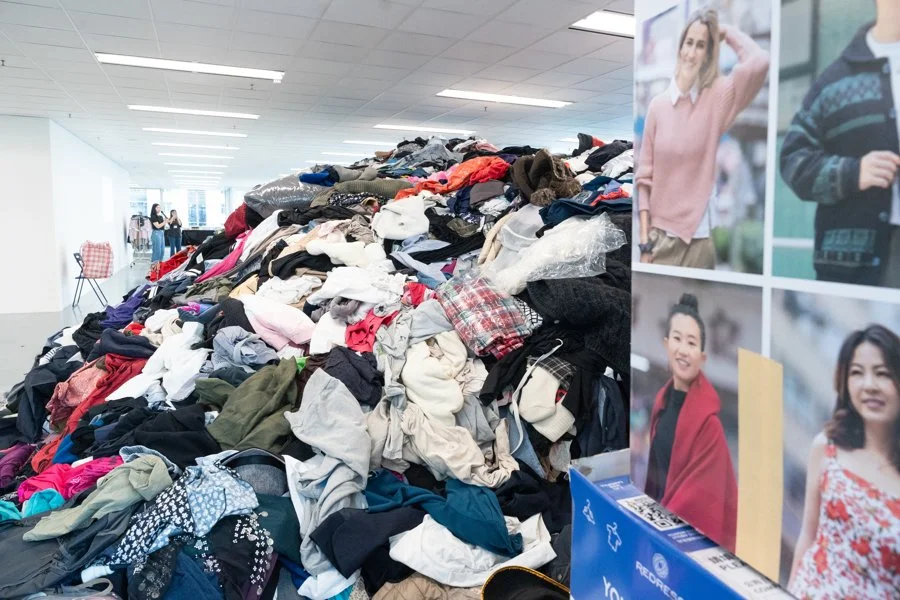
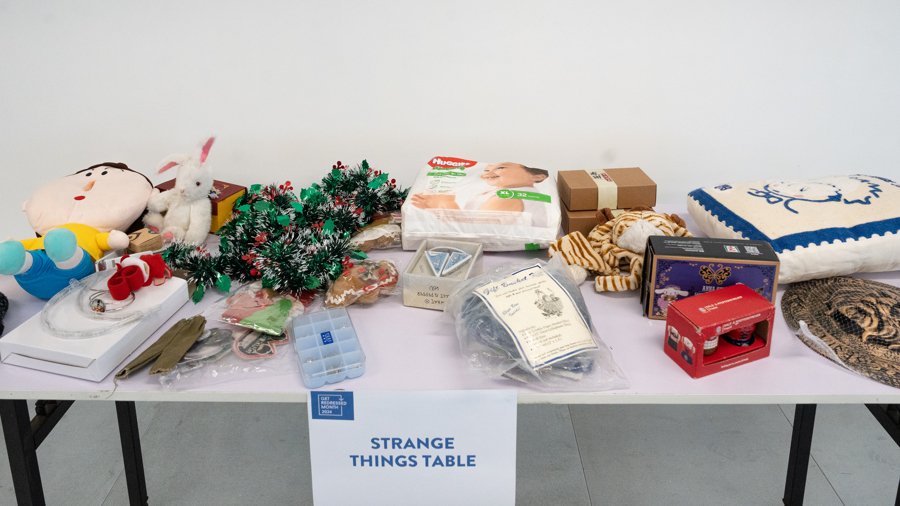
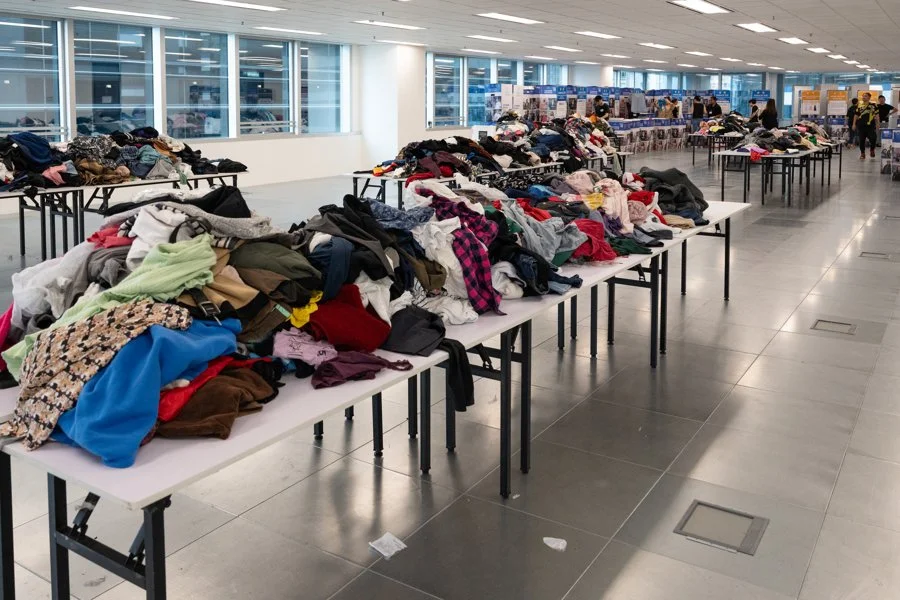
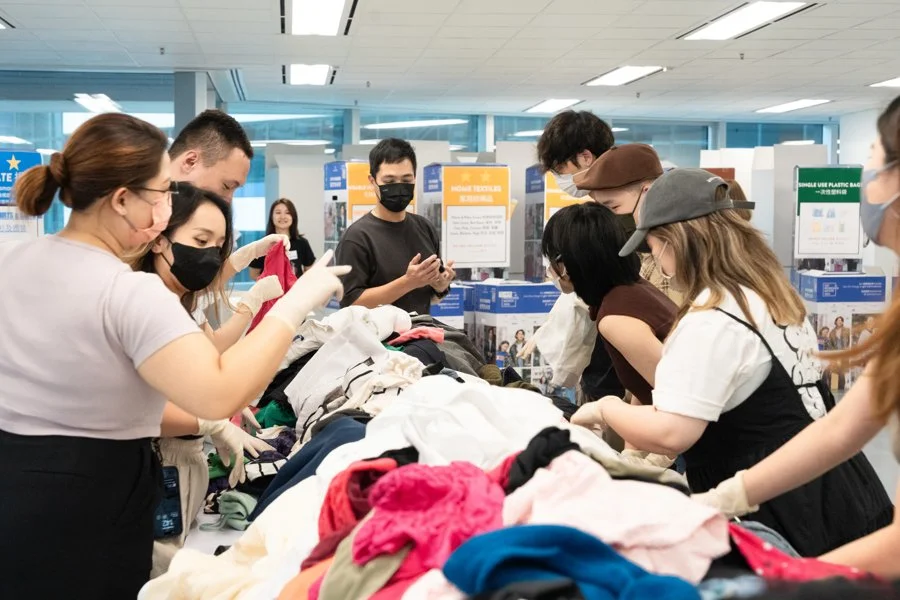
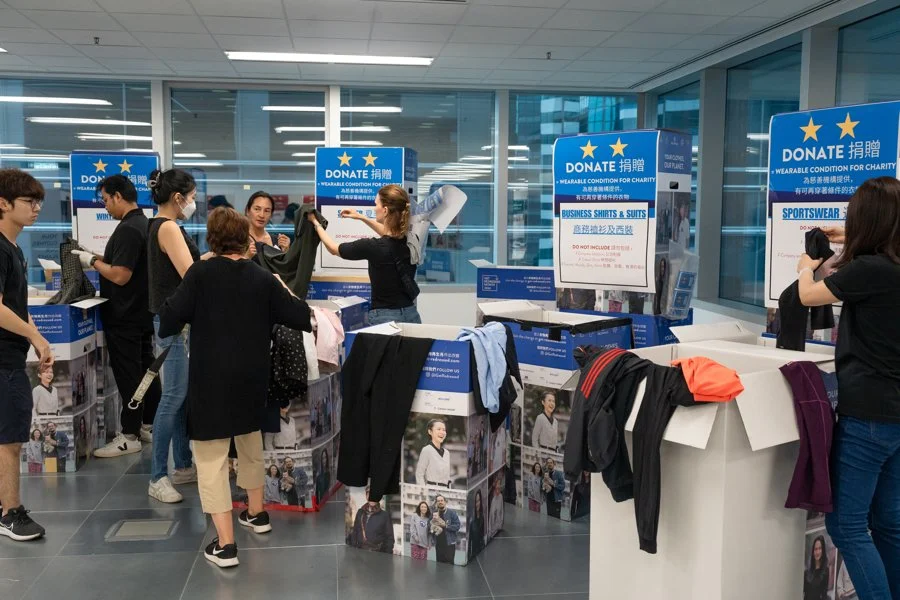
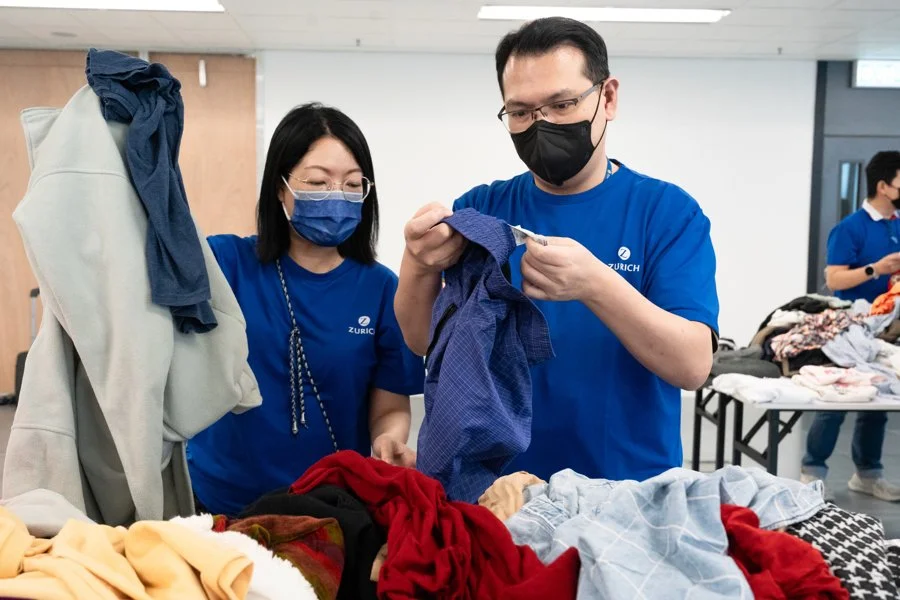
This employee engagement initiative is part of an annual public campaign encouraging more conscious everyday consumption. Each year, over 100 companies, schools, and community groups participate by donating clothing they no longer need. Volunteers join a three-day activation where they are trained to assess garment quality and sort items into 23 categories for redistribution. Through this hands-on experience, they discover the extent of wearable clothing waste, recognise how unnecessary disposal contributes to environmental impact, and learn simple ways to use their clothing for longer.
400
corporate employees involved
17
tonnes of clothes redistributed
8
event days including set-up and takedown
99%
of the clothing collected were redistributed
◎ Learning Challenge
Fun event, limited reflection.
While the event was lively and enjoyable, many employees joined without personal relevance. Entertainment elements like music and food risked overshadowing the educational purpose.
◎ Learning Goal
From good vibes to good habits.
Integrate impactful learning into the joyful format — without reducing the energy that makes the event appealing.
◎ Learning Design Interventions
Set clear purpose from the start
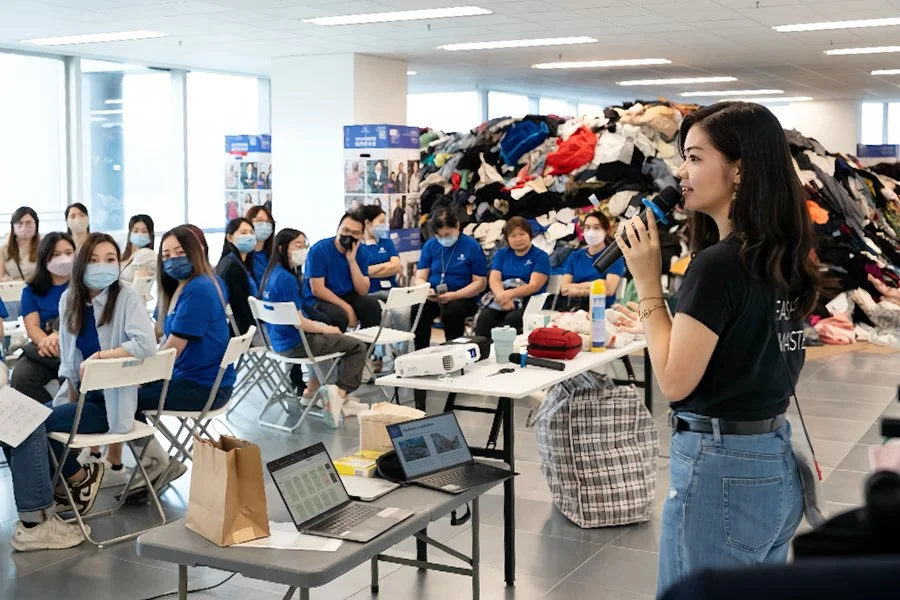
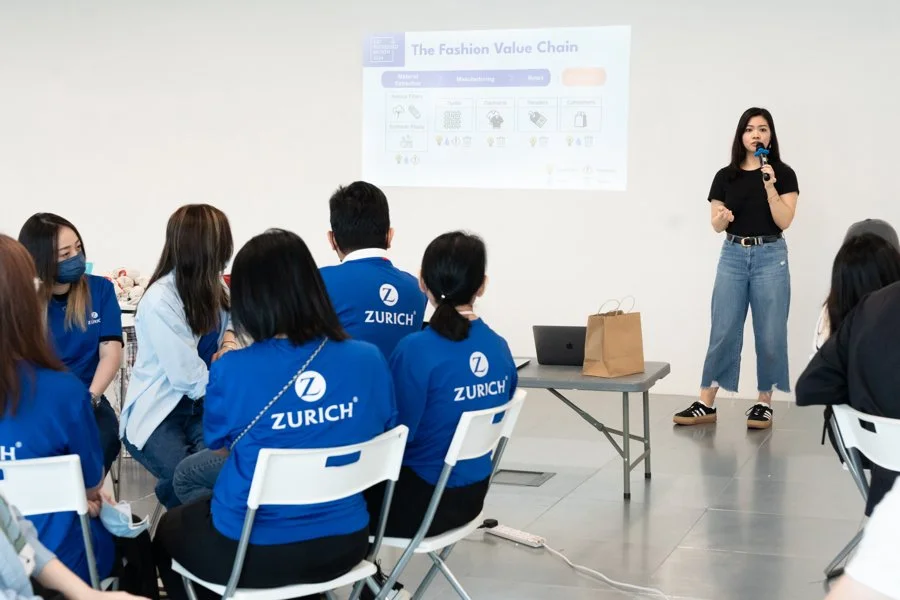
We redesigned the briefing to help volunteers understand why their work matters before sorting begins. A short, standardised introduction with simple visuals explained how much usable clothing gets discarded and how this event supports redistribution.
A “habit bingo” card encouraged each volunteer to choose small behaviour shifts they could try after the event. A brief debrief closed each session, helping participants connect what they sorted with decisions they make in their own daily lives.
Gamification to reinforce what they’re learning
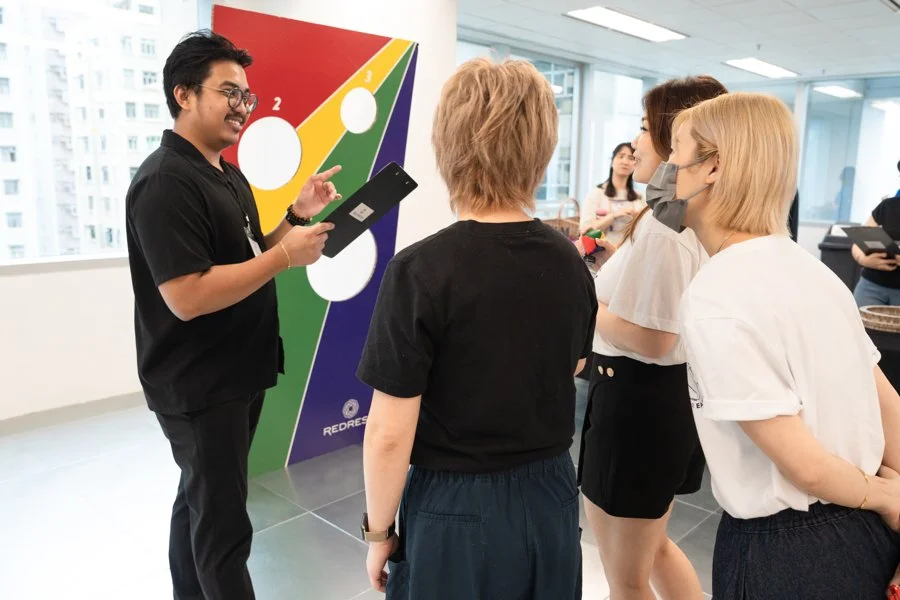
Breaks became additional learning touchpoints rather than downtime. Two small game booths quizzed volunteers on practical knowledge, such as garment care and better everyday choices.
Winners received sponsored gifts — almost 100 across all sessions — showing that volunteers willingly engaged while still enjoying the fun atmosphere the event is known for.
Make the issue personally relevant
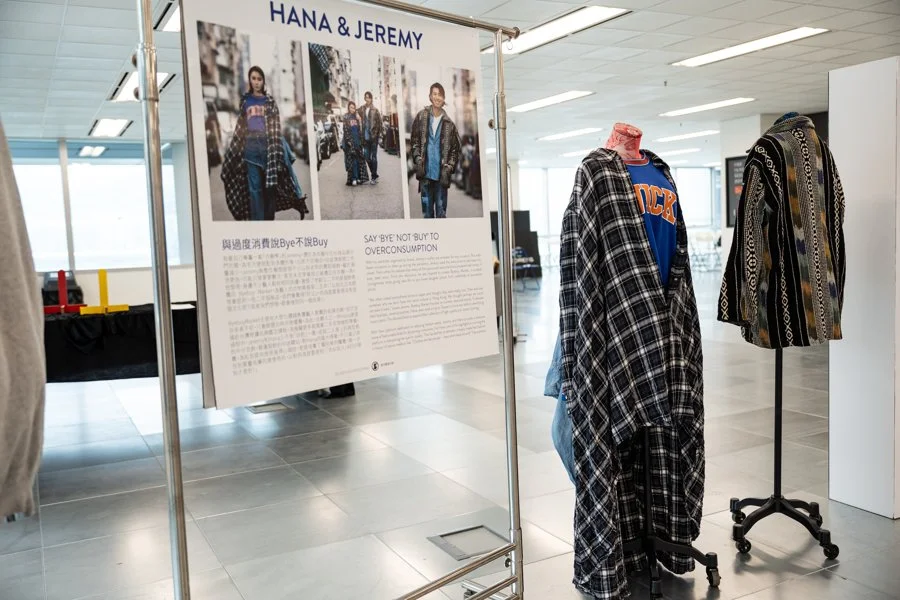
We curated a mini-exhibition featuring real community members and how they practise more sustainable habits at home. Volunteers could explore these stories while registering, during breaks, or after their sorting session. Seeing relatable examples helped volunteers realise that the experience wasn’t only about the event — it connected directly to everyday life.